When it comes to treating severe hip joint problems, especially in older adults or patients suffering from fractures or arthritis, hip replacement surgery can offer a new lease of life. Among the various surgical options, partial hip replacements, where only the femoral head (the “ball” of the hip joint) is replaced, are often performed. Within this category, two main types of prostheses are used: unipolar and bipolar hip prostheses. While they may seem similar on the surface, these implants have distinct differences in design, movement, and clinical outcomes. Understanding these differences can help patients and caregivers make more informed choices alongside their orthopedic surgeons.
What Is a Unipolar Hip Prosthesis?
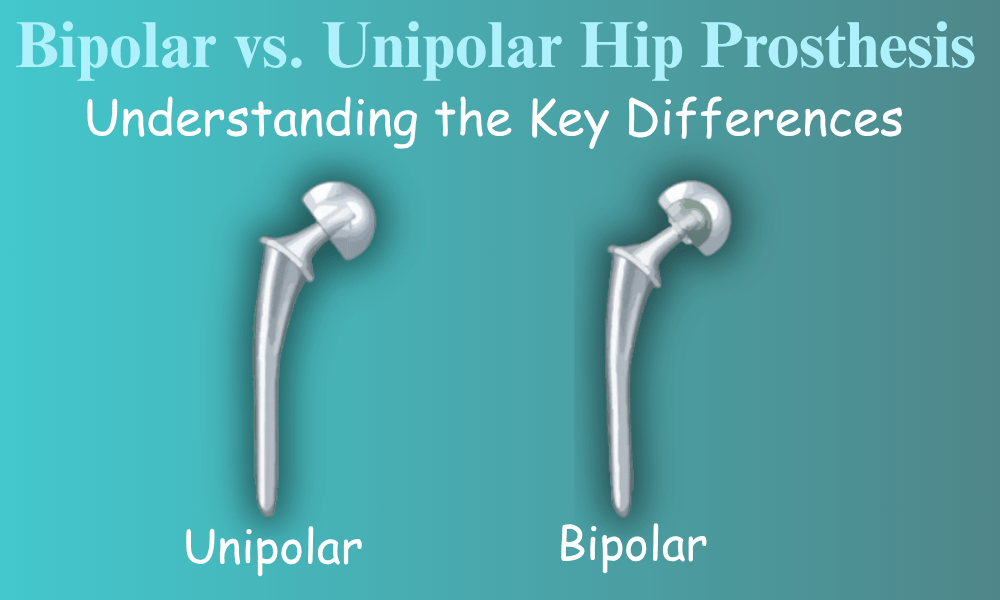
A unipolar prosthesis features a simple design: a single-piece implant where the metal head is fixed to the stem and directly articulates (moves) against the patient’s natural acetabulum—the socket part of the hip joint. In this system, there is no movement within the prosthesis itself; all motion happens between the artificial metal head and the acetabulum.
Unipolar designs are often considered for elderly patients with limited mobility or lower functional demands. Because of its straightforward construction, the unipolar prosthesis tends to be more cost-effective and quicker to implant during surgery. However, since the metal head rubs directly against the bone or cartilage of the acetabulum, there’s a higher chance of wear over time. This could lead to erosion of the acetabulum, which may require further surgical interventions down the line.
What Is a Bipolar Hip Prosthesis?
A bipolar prosthesis, on the other hand, is a two-piece design. It includes an inner head (which attaches to the stem inserted into the femur) and an outer shell that articulates with the acetabulum. The key difference lies in the dual articulation: movement occurs both between the inner head and the outer shell, and between the outer shell and the acetabulum.
This dual-motion design reduces the stress and wear on the acetabular cartilage. Because of this, bipolar prostheses are often recommended for patients who are relatively more active or have better overall health and life expectancy. By reducing friction at the socket interface, bipolar implants aim to preserve the acetabular bone for a longer time.
Key Differences Between Unipolar and Bipolar Hip Prosthesis
| Feature | Unipolar Prosthesis | Bipolar Prosthesis |
| Design | Single-piece | Two-piece (inner head + outer shell) |
| Movement | Only at the acetabulum | Dual movement (inside prosthesis + acetabulum) |
| Wear and Tear | Higher risk to acetabulum | Lower risk due to reduced friction |
| Cost | Generally lower | Typically higher |
Surgical Complexity | Simpler | Slightly more complex |
Use Case | Older, less active patients | More active or medically stable patients |
Clinical Considerations
While bipolar prostheses offer biomechanical advantages, the decision isn’t always straightforward. In real-world practice, studies have shown that over time, the inner movement in bipolar orthopedic implants can decrease, essentially functioning like a unipolar device. Additionally, patient-specific factors such as bone quality, fracture type, existing arthritis, and overall health status play a major role in prosthesis selection.
In trauma cases, especially with displaced femoral neck fractures, surgeons often lean toward bipolar implants to maintain better joint function for longer. However, for very elderly or sedentary patients, unipolar prostheses may be just as effective with fewer complications and shorter surgery times.
Conclusion
Choosing between a unipolar and bipolar hip prosthesis isn’t a one-size-fits-all decision. Both types have their merits and limitations, and the best option depends on the patient’s age, activity level, health status, and surgical goals. What remains common between the two is their ability to relieve pain, restore mobility, and significantly improve quality of life. Discussing these options thoroughly with an orthopedic specialist ensures that the chosen prosthesis aligns with the patient’s unique needs and long-term well-being.
 Siora Surgicals Pvt. Ltd.